WIND AND STORAGE PROJECT – ESTINNES
A FUTURE-ORIENTED PROJECT FOR THE REGION
Key figures
Inhabitants
of the municipality
7.955
# Wind turbines
and capacity
4 to 6 MW wind turbines
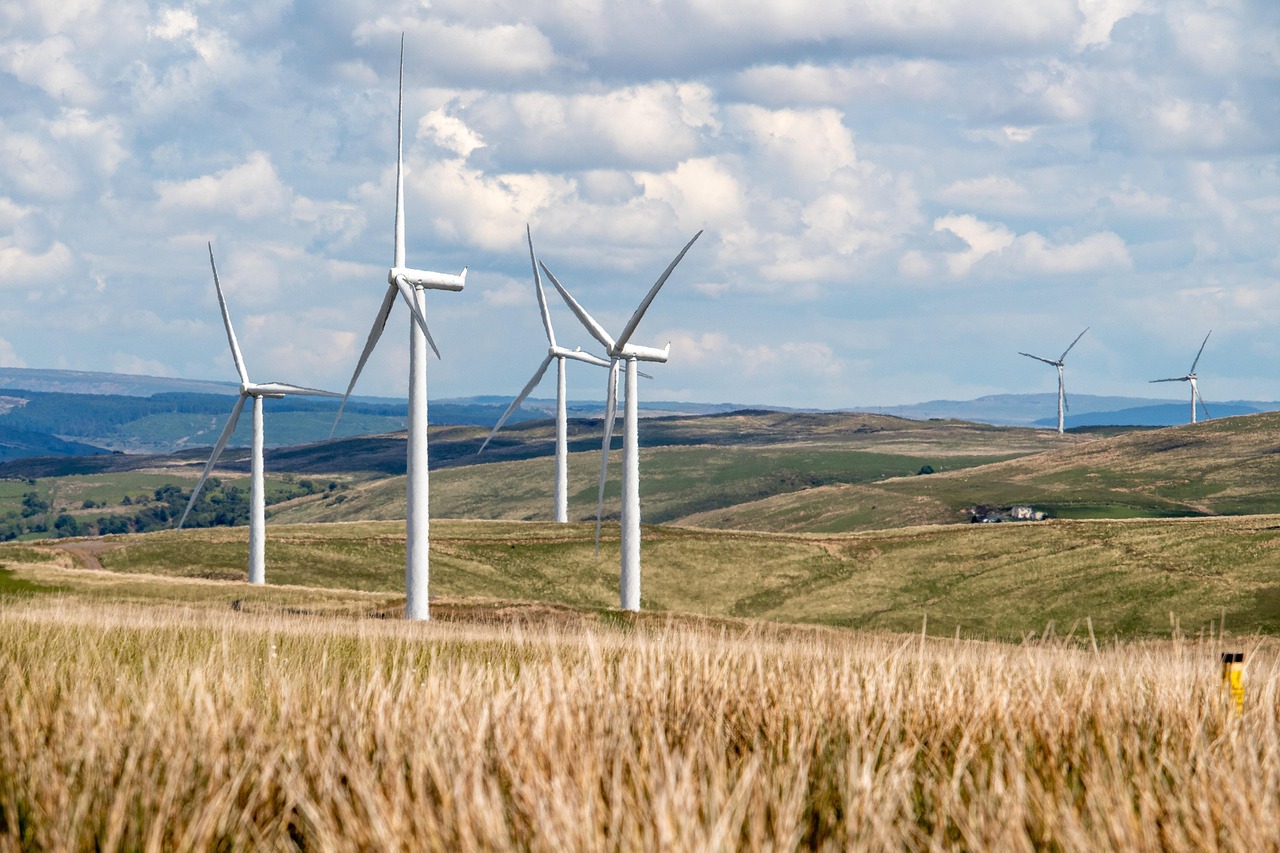
Each wind turbine has a total height ranging from 160 m to 200 m, and the rotor has a diameter of approximately 100 to 126 m.
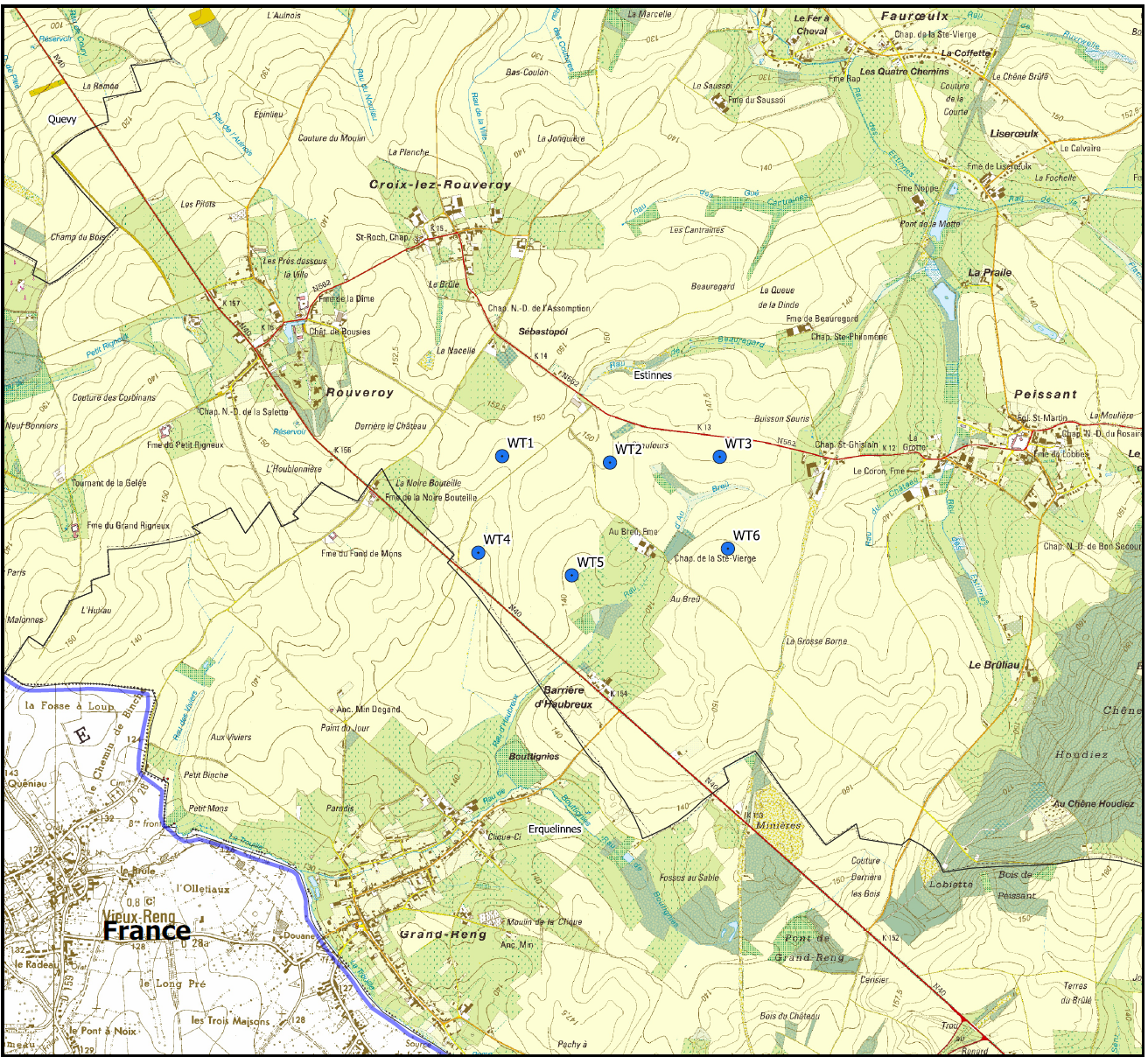
The capacity of each turbine ranges from 4 to 6 MW, for a total maximum capacity of 24 MW.
CO2 emissions
and electricity supply
80,7 GWh per year
The estimated maximum production of the 4 wind turbines is 80.7 GWh per year, which is equivalent to the average annual consumption of 23,000 Walloon households (based on a consumption of 3,500 kWh/year).
Furthermore, these wind turbines will avoid the emission of nearly 32,000 tonnes of Co2 per year (CWaPE data compared to a reference CCGT power plant), representing the equivalent of emissions from nearly 14,000 cars.
The partners
Project Owner

Environmental impact assessment firm, accredited by the Walloon Region
Based in Wallonia, Sertius has already been responsible for drafting over 200 environmental impact assessments in Wallonia.
Belgian consultancy firm specialized in the energy transition sector
Active in the development of renewable energy production projects, WattElse is currently working on 500 MW of renewable wind, solar, biomass, and storage projects in Belgium and France. WattElse has initiated the development of the Estinnes project. WattElse also provides support for energy strategy missions for both the public and private sectors (Industries and SMEs).
Our vision of sustainable development
Innovation
WE Impact, an expert in project management and renewable energy, is the proponent of this innovative project combining production and storage. Although storage is currently a recent technology, the company considers it absolutely necessary for our energy transition to address, among other things, the intermittency of wind production.
By combining these two technologies, WE Impact intends to meet three objectives
1. Maximize the project’s potential
2. Address the intermittency of wind power
3. Serve the electricity grid
The continuous increase in renewable energy production and storage
| Source : 2022 – L’Énergie en Wallonie
Wallonia’s power generation mix continues to diversify. Compared to 2021, the key highlights are as follows:
-
An increase of over 10% in the number of production facilities: mainly for solar photovoltaics, wind power, and biomass cogeneration;
-
An increase of just under 2% in electrical capacity, with the total reaching over 9,600 MW;
-
A decrease of over 12% in electricity production: a 22% drop in nuclear and a 36% drop in hydroelectric power;
-
A decrease of over 14% in the primary energy used to produce electricity: mainly linked to the decline in nuclear power;
-
Having first appeared in 2021, grid-connected battery storage facilities are showing strong growth, as is pumped-storage production.
Net renewable electricity production in 2023 is estimated at 6,222 GWh, representing 22% of the total net electricity production:
-
Renewable energy is energy produced from a source that, unlike fossil fuels, regenerates at least as fast as it is consumed. The depletion of fossil resources (oil, gas, coal), the pursuit of greater energy independence, and the fight against greenhouse gas emissions increasingly necessitate the use of renewable energy sources (RES).
-
Findings show that net renewable electricity production, which reached 6,222 GWh in 2023 (+16% vs. 2022, a 2.3-fold increase since 2010), represents 22% of total net electricity production. This is driven by biomass as a whole (21%), hydropower (6.3%, compared to 68% in 2000), the rise of wind power (49.2%, production has quadrupled since 2010), and photovoltaics (26.8%, production has increased 20-fold since 2010).
-
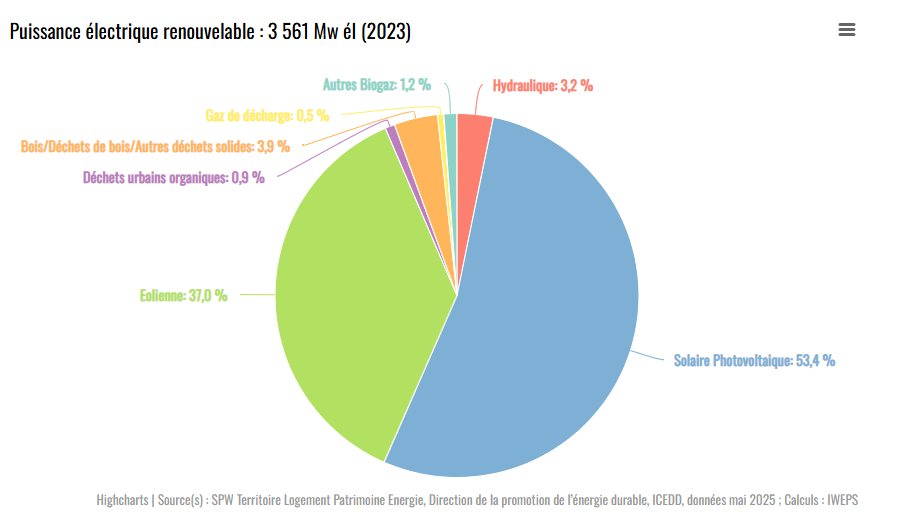
In 2023, renewable electrical capacity (installed capacity) reached 3,561 MWe (+15% vs. 2022) and has increased 3.7-fold since 2010 (and 12-fold since 2005, when it was 301 MWe). Note the surge in solar photovoltaics, up 26% compared to 2022 (a 22-fold increase since 2010), and wind power (+4% compared to 2022 and tripled since 2010).
The necessity of addressing the intermittency of renewable production through:
- Storage solutions;
- The deployment of market tools and incentives to enable proper and flexible electricity demand management;
- Proper production management that meets the balancing needs of the power grid.
Our approach and our commitment
- WE Impact is present at every stage of the project phase and pays attention of the project to local questions and concerns;
- Project Development which adresses environmental, tecnical and local aspects;
- Opening up the possibility for citizens to invest in the project